






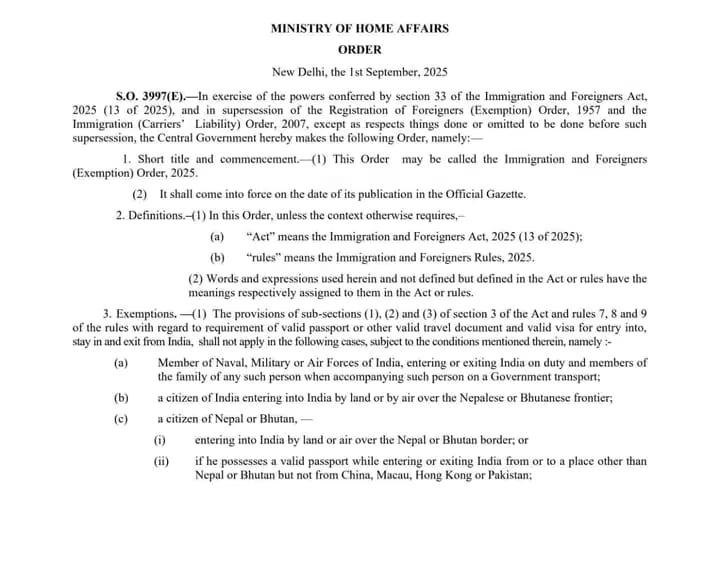
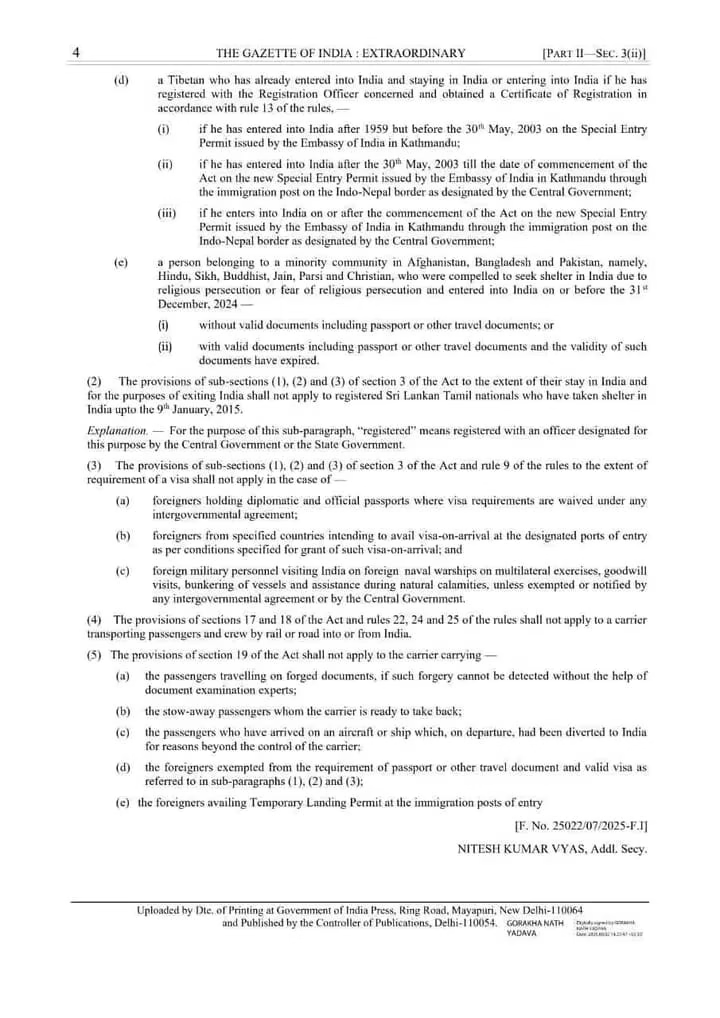
Agartala, September 4, 2025: The Ministry of Home Affairs (MHA) notification issued on September 1, 2025, under the Immigration and Foreigners Act, has sparked sharp criticism in Tripura. The order allows persons belonging to minority communities from Afghanistan, Bangladesh, and Pakistan including Hindus, Sikhs, Buddhists, Jains, Parsis, and Christians who entered India on or before December 31, 2024, to be exempted from certain provisions related to valid travel documents, making them eligible to seek Indian citizenship.
The Twipra Students’ Federation (TSF), in a strongly worded press release, condemned the move, describing it as an attempt to “legitimize refugees and illegal immigrants.” The student body argued that by extending the cut-off year from 2014 to 2024, the Centre is threatening the demographic balance, identity, and existence of the Indigenous People of Tripura and the Northeast.
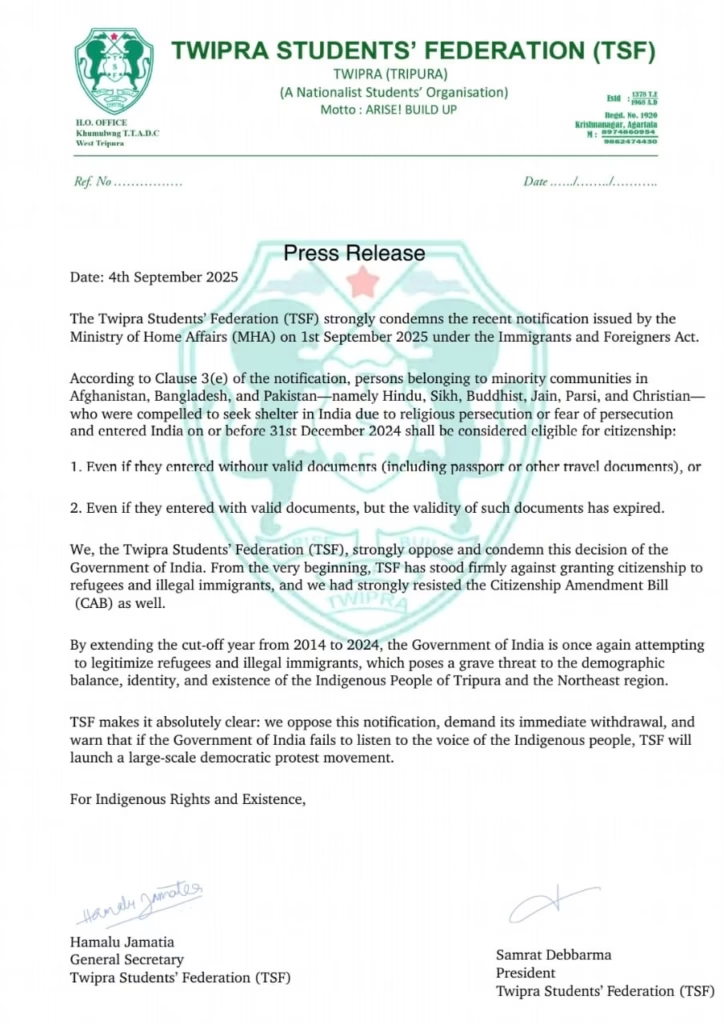
“From the very beginning, TSF has stood firmly against granting citizenship to refugees and illegal immigrants, and we had strongly resisted the Citizenship Amendment Bill (CAB) as well. This notification is unacceptable, and we demand its immediate withdrawal,” TSF leaders Hamalu Jamatia and Samrat Debbarma stated. They also warned of a large-scale democratic protest movement if the government fails to heed the concerns of Indigenous communities.
Adding his voice to the opposition, MLA Paul Dangshu took to social media, calling the decision “deeply concerning and difficult to comprehend.”
“In one of my Assembly speeches, I had said that the Indigenous people of Tripura are facing systematic discrimination and marginalisation, and this decision once again reinforces that reality,” Dangshu wrote. He questioned how undocumented entrants could be verified as belonging to persecuted minority communities and suggested that if the Centre truly wished to accommodate them, they should be settled in states like Gujarat, “the home state of many national leaders.”
Dangshu further warned that the Northeast has “borne the burden of unchecked migration for far too long,” and allowing undocumented migrants to stay will worsen competition for land, employment, and essential resources.
“If people are able to stay in India without valid documentation, then what purpose is our border security even serving?” he asked, pointing out that while Western nations are tightening their borders, India appears to be “opening its doors without question.”
With opposition mounting from both student groups and political leaders, the MHA’s notification is likely to face sustained resistance in Tripura and other Northeastern states where concerns over demographic changes remain highly sensitive.