




Agartala, July 3: The Tripura government has decided to continue its paddy procurement programme at the Minimum Support Price (MSP) during the current Rabi marketing season, reaffirming its commitment to providing remunerative prices to farmers across the state.
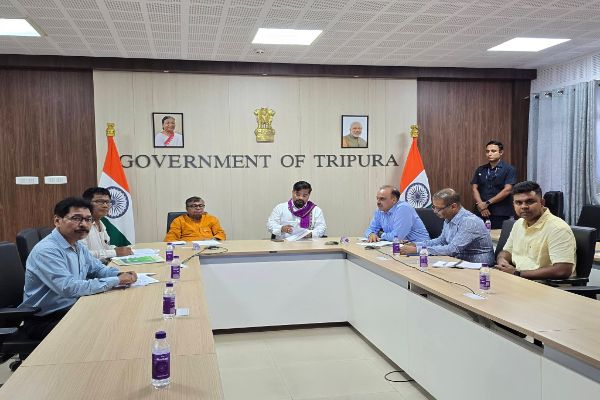
To review the preparedness for the procurement drive, Agriculture Minister Ratan Lal Nath and Food, Civil Supplies and Consumer Affairs Minister Sushanta Chowdhury chaired a high-level meeting through video conferencing from the State Secretariat on Friday. Senior officials from the Food and Agriculture departments, Sub-Divisional Magistrates (SDMs), and other stakeholders from all districts participated in the meeting virtually.
Addressing reporters after the meeting, Minister Sushanta Chowdhury announced that the state government aims to procure 20,710 metric tonnes (MT) of paddy during the current Rabi season. He said the procurement drive will officially begin on July 10, with Chief Minister Dr. Manik Saha scheduled to inaugurate the programme at Kakraban Agriculture Sub-Division in Gomati district.
The minister informed that the state Cabinet has already approved the procurement initiative, paving the way for smooth implementation across the state. Necessary arrangements are being made to ensure that farmers can sell their produce at the notified MSP without any inconvenience.
Chowdhury said the procurement programme is being implemented under the guidance of Prime Minister Narendra Modi and with the active support of Chief Minister Dr. Manik Saha. He noted that the state government has been procuring paddy from farmers twice a year, covering both Kharif and Rabi seasons, to ensure better income security and reduce the dependence of farmers on private traders.
The ministers directed officials to complete all logistical preparations, including procurement centres, verification processes, and storage arrangements, before the drive begins.
The MSP procurement initiative is expected to benefit thousands of paddy growers across Tripura by providing them with assured prices for their produce, strengthening the agricultural economy, and encouraging higher production. The government expressed confidence that the programme would further enhance farmers’ welfare while reinforcing its commitment to supporting the state’s agriculture sector through timely procurement and fair market access.