




Agartala, June 22, 2026: The India Meteorological Department (IMD) has issued a warning of heavy to very heavy rainfall across several Northeastern states over the coming days, with Assam, Meghalaya, and Tripura expected to witness intensified monsoon activity. The forecast comes amid widespread rainfall that has already affected normal life in parts of the region.
According to IMD officials, fairly widespread to widespread rainfall is likely across Arunachal Pradesh, Assam, Meghalaya, Nagaland, Manipur, Mizoram, and Tripura between June 22 and June 28. Isolated thunderstorms accompanied by lightning are also expected in many areas from June 22 to June 26.
The weather department has further predicted heavy to very heavy rainfall over Arunachal Pradesh, Sub-Himalayan West Bengal, and Sikkim, while Nagaland, Manipur, Mizoram, and Tripura are also likely to receive significant rainfall during the period.
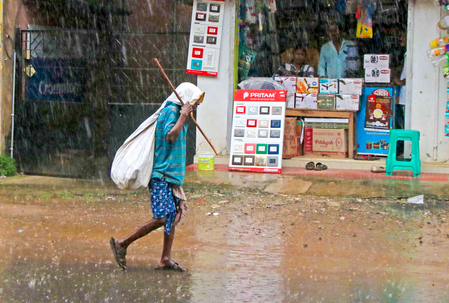
On Sunday, heavy showers lashed parts of Meghalaya and Tripura, causing disruptions in daily life. In Tripura, Agartala recorded 102.5 mm of rainfall within 24 hours, leading to waterlogging in several localities and traffic congestion on major roads.
Meghalaya witnessed some of the highest rainfall figures in the country. Mawsynram, located in East Khasi Hills district, received an extraordinary 530 mm of rainfall in 24 hours. IMD officials noted that the amount of rain received in a single night was equivalent to what some western Indian cities, including Jodhpur and Bikaner, receive over more than six months.
Other areas in Meghalaya also recorded exceptionally high rainfall, including RKM Sohra (470 mm) and Mawkyrwat (390 mm). Persistent downpours damaged a section of the Shillong-Dawki National Highway, affecting vehicular movement along the important route connecting India and Bangladesh.
The Southwest Monsoon, which entered the Northeastern region on June 7, has now covered all eight states. IMD officials said favourable meteorological conditions are supporting stronger monsoon activity, with rainfall across the region expected to remain normal to above normal throughout the season, benefiting agriculture and water resources despite localized disruptions caused by intense rainfall.