





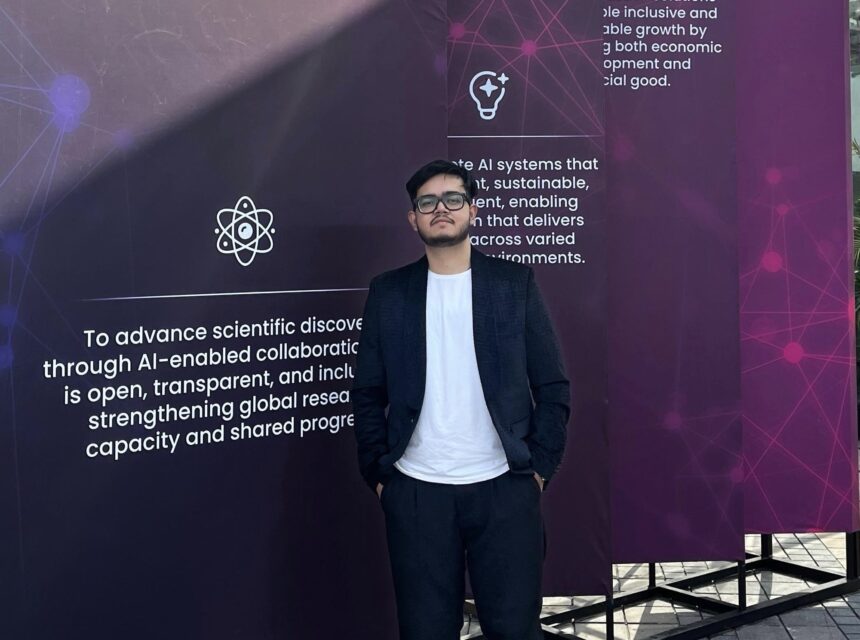
New Delhi, Feb 19: India’s growing ambitions in artificial intelligence took centre stage at the AI Impact Summit 2026, held at Bharat Mandapam in the national capital last week. The high-profile event brought together startups, policymakers, researchers, and students, highlighting the country’s push to emerge as a global player in AI development.
The summit featured a wide range of innovations, including AI-driven diagnostic tools capable of early disease detection through retinal scans, agricultural intelligence systems for predicting soil health and crop yields, and automated solutions for dairy production tailored to rural conditions. Education technology platforms offering personalised learning and AI-enabled governance tools for grievance redressal were also showcased.
A key focus of the summit was the development of indigenous foundational AI models. Among the highlights was Sarvam AI, a large language model designed for Indian languages and contexts. Speakers across multiple sessions emphasised the need for India to transition from being a consumer of AI technologies to becoming a developer of core systems.
Despite the positive momentum, the summit also faced criticism on social media over alleged mismanagement and inadequate facilities. Reports pointed to long queues during peak sessions and restricted access in certain areas due to security protocols.
However, on-ground observations suggested that while the event experienced pressure due to high attendance, core infrastructure remained largely functional. Digital signages, help desks, volunteer assistance, and essential amenities such as food counters, UPI-enabled payments, and drinking water facilities were operational throughout the venue.
A controversy also emerged around a quadruped robotic demonstration, which drew scrutiny online over its originality and claims. Following internal review, the concerned institutional panel was reportedly removed from the official schedule, underscoring the importance of accountability in presenting indigenous technologies.
Experts noted that such challenges are not uncommon in large-scale events and do not overshadow the broader significance of the summit. The gathering is being seen as a reflection of India’s evolving AI ecosystem, where innovation, policy, and research are increasingly converging.
The summit ultimately highlighted a shift in India’s approach to artificial intelligence from adapting global technologies to building its own foundational capabilities, including models, datasets, and institutional frameworks.
As India accelerates its AI journey, the event signalled both the opportunities and the growing pains of positioning itself on the global technology landscape.