




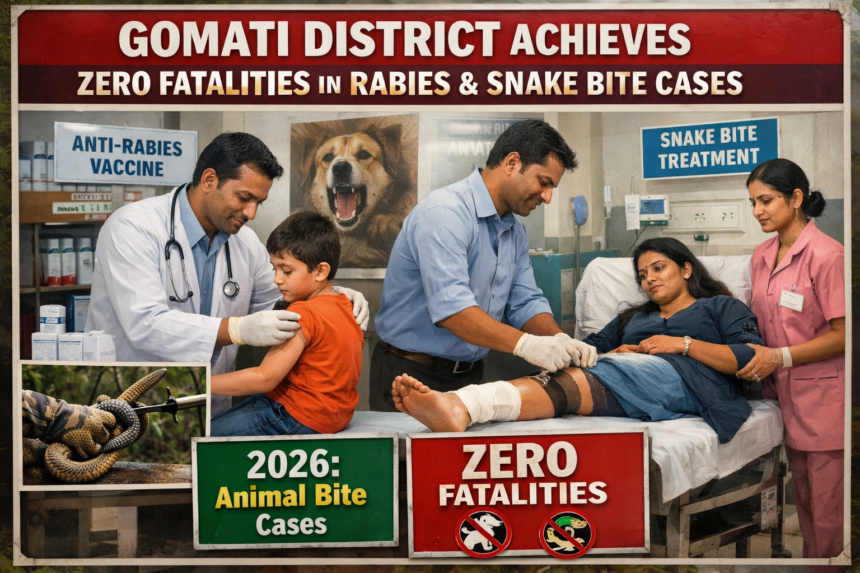
Gomati: Feb 09. Gomati district has emerged as a leading example in public health management after successfully preventing fatalities from rabies and venomous snake bites despite a steady rise in animal bite incidents.
Official data from the Integrated Disease Surveillance Programme (IDSP) shows that timely medical intervention, including the prompt administration of Anti-Rabies Vaccines (ARV), Anti-Rabies Serum, and snake bite management protocols, has ensured zero deaths across the district. In the first 36 days of 2026 alone, health facilities treated 251 dog bite cases and 172 cases involving other animals such as monkeys and bears.
The district has consistently managed a high caseload over the past two years. In 2024, Gomati recorded 1,263 dog bite cases and 703 other animal bite incidents, all treated through government health facilities. The numbers increased further in 2025, with 1,336 dog bites and 1,026 other animal bite cases, along with six venomous snake bite cases again without any reported fatalities.
District Surveillance Officer Dr. Saumik Chakraborty said the key to this success lies in acting within the “critical window” following a bite. He credited medical officers and frontline health workers for ensuring the immediate availability and administration of life-saving biologics, including immunoglobulin.
Chief Medical Officer Dr. Kamal Reang highlighted the district’s dual strategy of real-time reporting through the Integrated Health Information Platform (IHIP) and swift clinical response. He noted that categorising “other animal bites” separately helps address the region’s unique wildlife-related risks more effectively.
Health officials said sustained vigilance, rapid reporting, and decentralised availability of treatment continue to be the backbone of Gomati district’s success in rabies prevention and snake bite management.