




Khowai, Tripura: Nearly eight decades after India’s Independence, residents of Praja Bahadur Molsom Para, a remote tribal hamlet under Nonacherra ADC Village in Mungiakami Block of Khowai district, continue to struggle for one of life’s most basic necessities—safe drinking water.
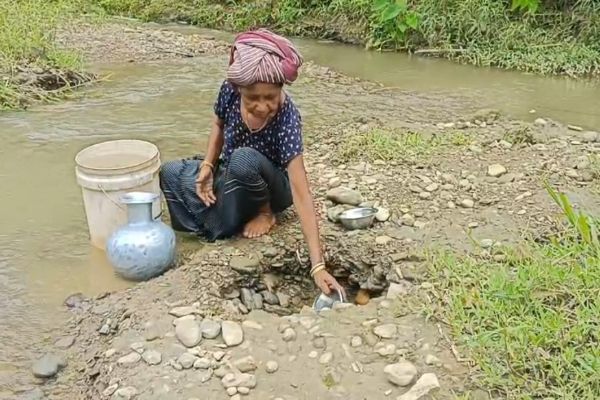
For the families living in this hilly settlement, clean drinking water remains out of reach. Every day begins with a difficult journey as men, women, children, and elderly residents trek through steep, rocky terrain carrying buckets, pitchers, and plastic containers to nearby hill streams. After hours of effort, they return with only a limited quantity of water, which serves all household needs, including drinking, cooking, and washing.
The situation becomes even more alarming during the monsoon season. Rainwater washes mud, decaying leaves, and other debris into the streams, making the already unsafe water more contaminated. With limited financial resources, many households cannot afford the fuel needed to boil water before consumption, leaving them with no option but to drink untreated water.
Villagers say the consequences are severe. Water-borne diseases such as diarrhoea, stomach infections, and other illnesses are common, with children and elderly people suffering the most. Access to healthcare is equally challenging, as medical facilities are located far from the village and poor road connectivity, coupled with financial hardship, often delays treatment.
According to local residents, the drinking water crisis has persisted for years despite repeated appeals to the administration, elected representatives, and concerned departments. However, no permanent drinking water supply has been provided.
While development has reached many parts of Tripura, residents of Praja Bahadur Molsom Para say they continue to be denied a basic human necessity. “Our only request is that our children should not fall sick after drinking contaminated water. Safe drinking water would be the biggest development for our village,” said a resident.
The plight of this remote tribal habitation raises serious concerns about the delivery of essential public services in isolated areas. Even after 79 years of Independence, the continued dependence on polluted stream water reflects the persistent gaps in rural infrastructure and highlights the urgent need for authorities to ensure access to safe and reliable drinking water for every citizen, regardless of how remote their village may be.