




Tripura, 05 May 2026: A 12-hour bandh called by the youth wing of the Tipra Motha brought normal life to a halt in Jampuijala and Takarjala on Tuesday, intensifying political tensions in Tripura’s tribal belt. The shutdown was triggered by the arrest of party leader Ranjit Debbarma, prompting widespread protests and raising concerns over law and order in the region.
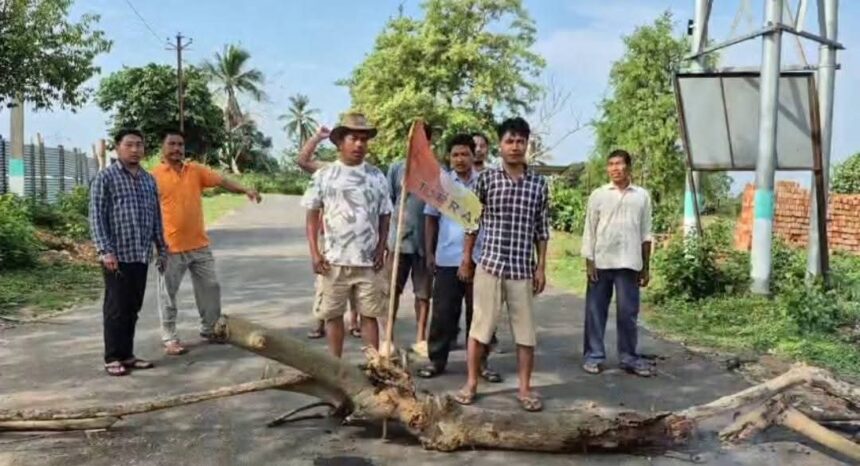
Supporters took to the streets early in the day, blocking roads, burning tyres, and forcing shops and establishments to shut down. Public transport was severely disrupted, leaving commuters stranded, while government offices and schools remained largely closed. Police personnel were deployed in sensitive areas to prevent further escalation.
Ranjit Debbarma, Chairman of Jampuijala ADC Village, was arrested in connection with the vandalism of a local office of the Bharatiya Janata Party during a victory procession on Sunday. Protesters, however, allege that the arrest was politically motivated and have demanded his unconditional release. They warned that the agitation could intensify if their demands are not met.
The incident has snowballed into a broader confrontation between political groups. Police have registered cases against 16 individuals, including Tipra Motha MLA Biswajit Koloi and MDC Suraj Debbarma, in connection with the attack on the BJP office in Jampuijala market. The vandalism, which occurred despite police presence, has drawn sharp criticism from the ruling party.
Chief Minister Manik Saha ordered strict action following the incident. In a significant administrative move, Officer-in-Charge of Jampuijala Police Station, Mrinal Kanti Reang, was suspended for failing to control the situation, and a new officer was appointed under senior supervision.
The BJP condemned the attack as an attempt to disrupt peace, while Tipra Motha leaders described the arrests as part of a political crackdown. As both sides trade and tensions persist, the situation remains volatile.
The bandh has once again highlighted the fragile political environment in Tripura’s tribal areas, where local disputes often escalate into wider unrest, posing challenges to governance and stability.