


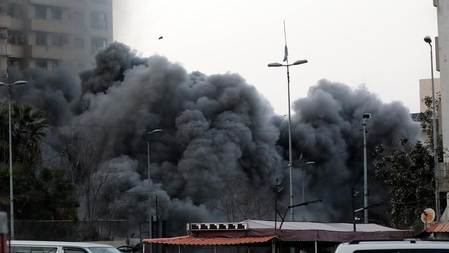
Washington, April 3: The United States has carried out a major airstrike on a key highway bridge in Iran, sharply escalating tensions between the two nations. The strike targeted the B1 bridge connecting Tehran with the nearby city of Karaj, a route US officials described as strategically significant for Iran’s military logistics.
A US military official said the operation was aimed at disrupting a “planned military supply route” used for transporting missile and drone components. The strike forms part of a broader campaign to weaken Iran’s ability to move critical military equipment across its territory.
US President Donald Trump confirmed the attack in a social media post, issuing a stark warning to Tehran. “The biggest bridge in Iran comes tumbling down, never to be used again — much more to follow!” he wrote, urging Iranian leaders to “make a deal before it is too late.”
However, Iranian state media disputed the US claims, stating that the bridge was not yet operational and had no military use. Authorities reported that at least eight people were killed and dozens injured in the strike, including civilians who were outdoors during the Nowruz holiday.
Iran’s leadership responded with defiance. Parliament Speaker Mohammad Ghalibaf said the country was fully prepared to defend itself. “Each and every one of us will become a soldier of this country,” he declared, adding that Iranians were “armed, ready and standing.”
Tehran also ruled out any immediate negotiations with Washington, with a foreign ministry spokesperson saying talks were “impossible under current conditions.”
The situation has further intensified with reports of additional strikes. Iranian authorities said an airstrike hit the Pasteur Institute of Iran, calling it a “direct assault on international health security.”
Regional tensions are also mounting. Israel reported intercepting missiles fired from Iran, while Yemen’s Houthi forces launched a missile toward Israeli territory.
Meanwhile, diplomatic efforts remain stalled at the United Nations Security Council, where Russia, China, and France blocked a proposal to authorise force to reopen the Strait of Hormuz, underscoring deep global divisions over the crisis.